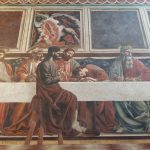
Too little time and too many complicated ideas? Here’s Flora’s advice on how to visit Florence in a day, so you can make the most out of your time in the city, from the sights that can’t be missed to those that you won’t find on the typical tourist itinerary.
Florence is a city with an immense cultural heritage and it’s easy to feel overwhelmed by its beauty and the vast quantity of works of art, monuments and places to visit. To avoid getting “Stendhal’s syndrome,” you should have a realistic idea of where things are and how long they will take to visit. It’s helpful to make a list of the places you’d like to see, check their locations on a map, and make a careful selection. To help with your choices, ask yourselves a simple question: what are you hoping to find when you travel? Works of art in famous museums, a lesser-known hidden gem, or the relaxing green space of a walk in the park? Follow your instincts, and you’ll be happy!
How to Visit Florence in a Day: Can’t-miss Sights
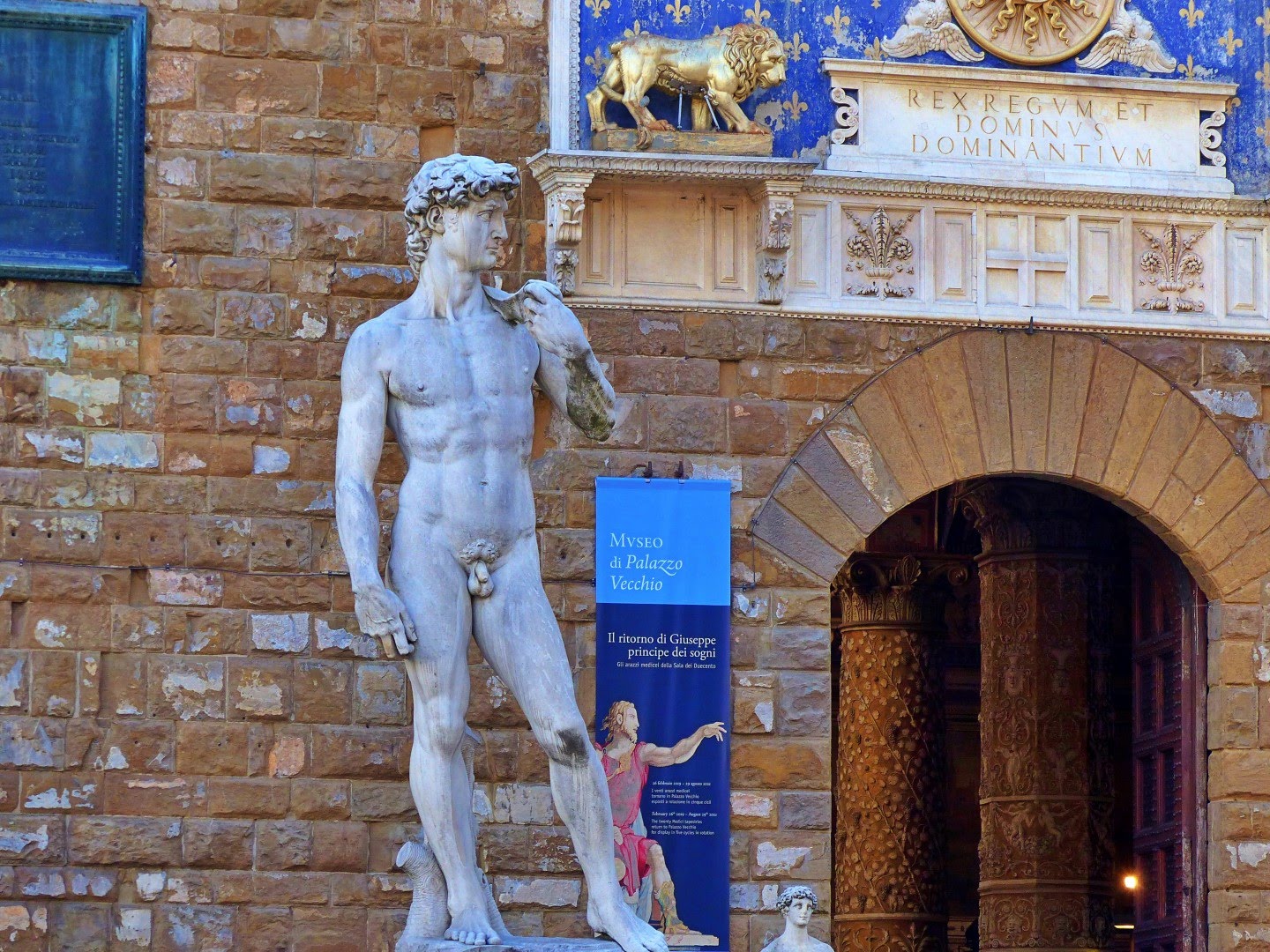
Florence means David, Venus, and “bistecca alla fiorentina“. There’s little need to go on, but I’m sure that you’re curious to know more.
The most important locations in the historic center that you can’t miss during your one day in Florence are Piazza Duomo, Piazza della Signoria and Ponte Vecchio.
Start from Piazza Duomo, the spiritual heart of Florence: admire the Baptistery, dedicated to Saint John the Baptist, the patron-saint of Florence. Here Dante Alighieri, who called the building “il mio bel San Giovanni,” was baptized. The three doors on the baptistery are copies; the originals are conserved in the Duomo Museum. Nevertheless, you shouldn’t miss the east doors. Nicknamed the “Gates of Paradise” by Michelangelo for their exceptional beauty, they were cast by Lorenzo Ghiberti between 1425 and 1452. Featuring scenes from the Old Testament, they represent a manifesto of the Renaissance style. You can’t miss them! Continue exploring the Piazza and admire the Cathedral of Santa Maria del Fiore with Brunelleschi’s Dome and Giotto’s Belltower.
Your next stop is Piazza della Signoria, the political heart of Florence. Considered a true open-air museum, it’s adorned with a plethora of statues, almost all of them original. In fact, here you can admire Giambologna’s Equestrian Monument of Cosimo I, the Fountain of Neptune sculpted by Bartolomeo Ammannati and Giambologna, Donatello’s Marzocco lion (copy), Michelangelo’s David (copy), and Hercules and Cacus by Baccio Bandinelli. Under the Loggia dei Lanzi, you will find Benvenuto Cellini’s masterpiece, Perseus with the Head of Medusa, as well as Hercules and the Centaur and The Rape of the Sabine Women by Giambologna.
Don’t forget to take a close look behind Benvenuto Cellini’s Perseus: you’ll be able to spy his self-portrait!
Your stroll ends just a few steps from Piazza della Signoria, on the Ponte Vecchio, the symbol of Florence. It dates to 1345 and is the oldest bridge on the Arno. Formerly the market of the fishmongers and butchers, it was transformed into the goldsmith’s bridge in the 16th century by the will of the Medici family. Don’t forget to take a photo of the Ponte Vecchio from Lungarno Anna Maria Luisa de’ Medici.
After this nice walk, you’ll need to unwind with a good meal: a bistecca fiorentina and a glass of Chianti will help you relax!
In the afternoon, it’s your choice: for Michelangelo lovers, I recommend the Accademia Gallery, where you can admire the David, sculpted between 1501 and 1504 from just one block of marble. For lovers of painting, the Uffizi Gallery is a must.
A visit to the Accademia Gallery is short (about an hour). The museum consists of medieval and late sixteenth-century paintings, a section dedicated to music and statues sculpted by Michelangelo (David, The Slaves, Saint Matthew and the Palestrina Pieta’ – only attributed).
A visit to the Uffizi Gallery is much longer (around three hours). The museum is larger and it contains numerous works of art. The must-sees include works by Giotto, Gentile da Fabriano, Piero della Francesca, Filippo Lippi, Sandro Botticelli, Leonardo da Vinci, Michelangelo, Raphael, Titian, and Caravaggio.
Here’s a trick question: Is it possible to visit both the Uffizi and the Accademia in a single day? Everything is possible and many do, but Flora would never advise this.
Art should be enjoyed, not consumed: better to see less but appreciate more than to see a lot and be unable to enjoy it.
Always remember that the Uffizi and the Accademia are the most visited museums in Florence: it’s necessary to reserve tickets in advance in order to guarantee entry at your preferred time.
Are you already hoping to come back again because you decided to visit one gallery and not the other? Don’t panic: just head over to the Mercato del Porcellino, a few steps from the Ponte Vecchio, and touch the Porcellino’s nose to ensure your return to Florence. The tradition of the Porcellino comes from a fairytale by Hans Christian Andersen. By the way…it’s not really a porcellino (Italian for little pig), but a wild boar!
How to Visit Florence in a Day with An Original Twist
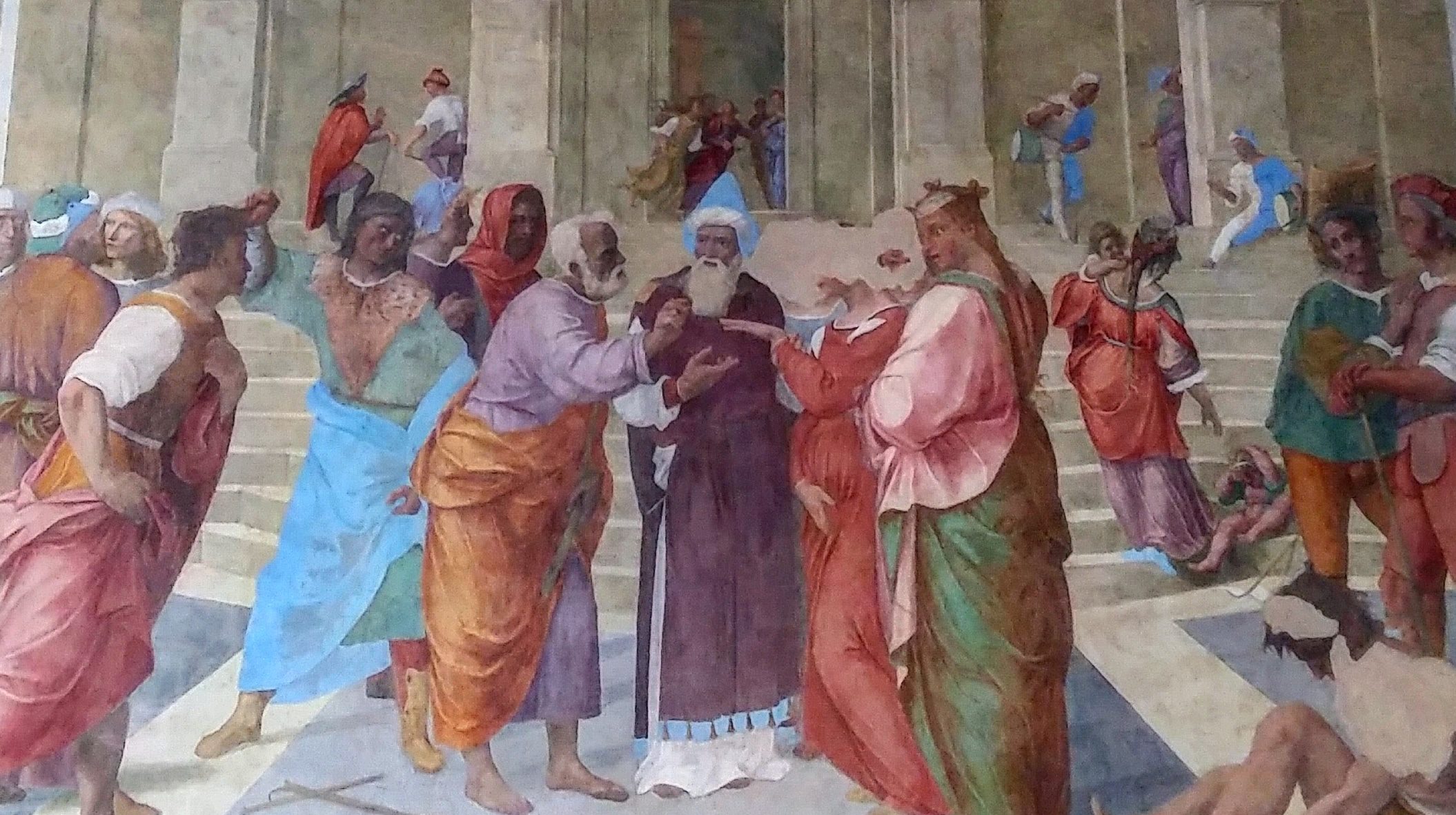
What if you’ve been to Florence so many times that by now you know the Duomo, the David, and the Porcellino by heart? You’ve taken hundreds of photos, gone shopping, eaten bistecca fiorentina and then some. Now, you want to really get to know the city of lilies: enough stereotypes and clichés, what hidden parts of Florence deserve to be seen?
Well, all you need to do is make a plan. Start off in Piazza Santissima Annunziata. Enter the Chiostrino dei Voti and admire the birth of Mannerism. Florence isn’t just the birthplace of the Renaissance style, but also that of another movement, initiated by the painter Andrea del Sarto. In the Chiostrino dei Voti you can contemplate the beginnings of the Mannerist style of Andrea del Sarto, Franciabigio, Pontormo, and Rosso Fiorentino. Don’t miss Franciabigio’s celebrated “faceless Madonna” and…if you see a giraffe anywhere, let me know. I’ll tell you what it’s doing there!
Return to the piazza and try to count the bees on the equestrian monument celebrating Ferdinando I de’ Medici…Did you manage to count them all?! Oh, see that window on the lovely palazzo in front of you? It’s always open…do you know why?
If you’re not interested in the Archaeological Museum featuring an Etruscan Chimera sculpture dating from the 3rd to 2nd century BC and a collection of Egyptian mummies (it’s the second most important Egyptian collection in Italy after the one found in Torino), you have two choices as you leave the piazza: you can head west, towards the Santa Maria Novella train station, passing the Chiostro degli Scalzi (free, monochrome paintings by Andrea del Sarto), Palazzo Viviani (known as Palazzo of the posters and dedicated to Galileo), various “wine doors” and the famous Santa Maria Novella Pharmacy, or you can go south.
In this case, walk along Via dei Servi and pay attention to the panels on the buildings: Donatello’s workshop was on this very street. At the intersection of Via de’ Pucci, you will see a window that was walled-up following an attempt to assassinate Cosimo I de’ Medici. Further along, you’ll find yourself behind the Duomo. See the white stone circle on the ground? It marks the spot where, in 1600, the gold-plated ball that had topped the dome since 1471 fell to the ground following a lightning strike. It was repositioned in 1602. If you want to take an intellectual break with a panoramic view, you’re just a short distance from the Oblate Library. Climb up to the last floor, admire the cloister with its double-order of columns, and sip a coffee with a view of the dome. The library is located in Via dell’Oriuolo, previously called Canto dei Bischeri. Do you remember them? The Bischeri were members of a sly family who tried to fool the Opera del Duomo in the late middle ages. During the construction of the cathedral, building was slowed due to the presence of house-towers in the piazza. The republic had to expropriate them all, and the only family to resist were the Bischeri, who wanted to sell their homes at a higher price. But they failed to consider their enemies’ cleverness, and, one night, they found that their house-tower had been burned to the ground. So, the Bischeri left Florence. Now do you understand why in Florence they say, “You’re a Bischero!”
Your curious stroll still isn’t finished. Along the Via del Proconsolo you will find the Palazzo Pazzi, of the conspiracy. You won’t be able to visit inside, but it’s worth noting, because it’s nearby Bernardo Buontalenti’s famous Palazzo non finito. Via del Proconsolo marks the location of western side of the old Roman city walls of Florentia, founded by the Romans in the 1st century BCE. If you study the street carefully you can see the circular form of an ancient guard tower. Another strange tower in the area is that in Piazza Sant’Elisabetta, in Dante’s neighborhood , where the Torre della Pagliazza – now the Hotel Brunelleschi – stands on the foundations of ancient Roman baths which were in the form of an exedra. This explains the characteristic shape of the tower. Why “della Pagliazza”? Because it became a women’s prison and the women had to sleep on beds made of hay (paglia in Italian). Nearby, between one tower and the next, is the Torre della Castagna. While its name means “tower of the chestnut” in Italian, it is also called the “tower of the ballot” in Tuscany. This is because chestnuts were once used to cast votes in the ballotaggio, the elections of the Florentine republic.
For a beautiful finish to your unique stroll in Florence, I recommend three churches, all of which are free to enter – but be sure to check their opening hours.
In the dim, Romanesque Church of Santissimi Apostoli on Borgo SS. Apostoli you will find traces of ancient Roman artifacts and the stones from the Holy Sepulcher in Jerusalem, which are used for the Scoppio del Carro Easter celebrations.
In the Church of Santa Trinita you can admire splendid frescoes by Ghirlandaio in the Sassetti chapel. Don’t miss his self-portrait in the altarpiece depicting thing Adoration of the Shepherds: Ghirlandaio the master of Michelangelo, was the most striking of all Florentine artists!
In the Church of Santa Felicita, located in the Oltrarno, don’t miss the Barbadori-Capponi Chapel with Pontormo’s Deposition from the Cross: the evanescent forms, phantasmagoric colors, and precarious instability of the work are a masterpiece of Florentine mannerism.
How to Visit Florence in a Day: Relax in the green-space of gardens
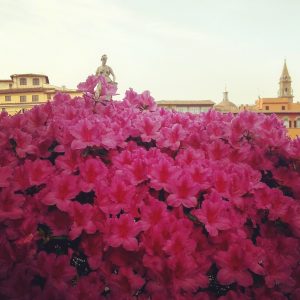
What should you see in Florence in a day if you love nature and the weather is nice? I recommend that you visit its fantastic gardens!
Begin your garden stroll in the city’s most famous park: the Boboli Gardens. Eleonora di Toledo bought Palazzo Pitti and the Orto de’ Pitti in 1549. She commissioned the architect – and garden designer – Niccolo’ Pericoli (known as il Tribolo) to transform the Boboli hill into a garden alongside Davide Fortini, Giorgio Vasari, Bernardo Buontalenti, Giulio and Alfonso Parigi and many others. This Renaissance Italian garden was a true work in progress from the 16th century until the 19th century: located on a hill, it covers a slope reaching a height of 130 mt, presenting panoramic views of the natural amphitheater formed by the Florentine hills. Explore the amphitheater with its obelisk and granite Roman basin; look for the iceboxes considered the predecessors of the refrigerator that were designed by Gherardo Mechini in 1612; recline in the shade or the sun (depending on the season) on the Prato dei Castagni lawn; walk down to the Vasca dell’Isola, a pond surrounded by a fragrant collection of citrus trees in the spring. Amuse yourselves by examining the grimaces on 17th-century statues of rustic peasants and then climb up the carriage road built in 1834 which replaced, unfortunately, the mazes once found there. Climb to the Giardino del Cavaliere and take in the panorama of the olive groves that stretch to the Basilica of San Miniato al Monte and the Torre del Gallo. The masterpiece of the Boboli gardens is Bernardo Buontalenti’s Grotta Grande: be sure to check its opening times so that you can stroll through its three rooms filled with stalactites, painting, and sculptures made of seashells and corals before arriving at Giambologna’s splendid Venus statue, which balances on a basin of African green marble, in the last room. Before you exit the gardens, be sure to take a 360 degree panoramic photo of the Kaffehaus. Recognizable by its light pastel green color and Orientalizing onion dome, it was built by Zanobi del Rosso towards the end of the 18th century for coffee and hot chocolate tastings. It will most likely be open to visitors as a refined cafeteria by the end of 2021.
The Boboli Gardens has several different exits: I recommend taking the Forte Belvedere exit in order to reach the Bardini Garden (included in the Boboli Gardens ticket). Located at a panoramic point above Florence, the Bardini Garden is smaller than Boboli and consists of three gardens: an Anglo-Chinese garden, a scenic baroque terrace bordered by irises, and an orchard dedicated to agriculture. However, most impressive is the wisteria pergola. At the end of April, the Bardini Garden becomes the most photographed park in Florence. A stroll through the lilac corridor beneath the shade of the flowers, surrounded by the scent of honey and the buzzing of bees will make you feel as though you’re walking in a dream. If you find yourself in Florence at this time of year, I recommend that you visit the Bardini Gardens early in the morning if you want to save your dream from getting too crowded. Given the limited period in which the Bardini Garden is at its most beautiful, it attracts large crowds!
After you’ve spent a pleasant morning visiting the Boboli and Bardini gardens, you have two choices: you can stay in Florence and seek out the city’s less accessible gardens – contacting their owners ahead of time to organize a visit – or you can take a quick trip by car in the countryside around Florence.
If you prefer the first option, I recommend visiting the Torrigiani Garden. At just a short distance from the Boboli Gardens, it’s the largest private Romantic garden in Europe. Another option would be to continue on from the Bardini Garden to walk alongside the walls until you reach Porta San Miniato: from here, you can easily reach the Rose Garden and the Iris Garden. They are both free to enter, and are at their most beautiful in May. The Rose Garden is decorated with sculptures by Jean Michel Folon and contains a Japanese garden donated by Kodai-Ji Temple in Kyoto, Florence’s twin city. The Iris Garden was founded in 1954 for the annual iris competition and is open only from April to May, the period when irises are in bloom. Few know that the flower on Florence’s coat of arms was originally a white iris and not a lily (as the name giglio would suggest).
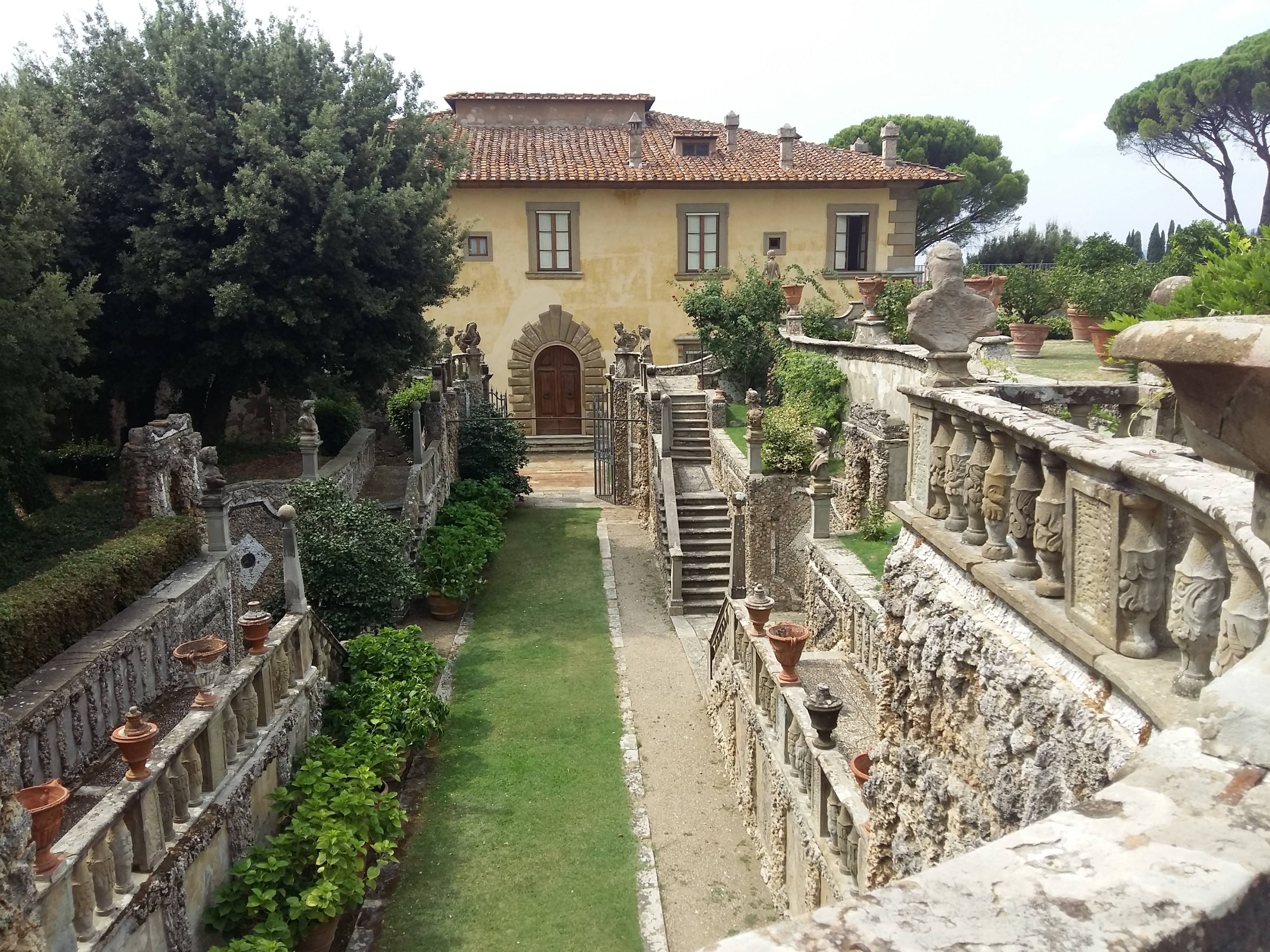
If you instead prefer to explore Florence’s countryside by car, the garden of Villa Gamberaia in Settignano is the one for you. The village of Settignano, quiet and picturesque, was the birthplace of sculptors and carvers. Here Gabriele d’Annunzio lived in search of Eleonora Duse. Villa Gamberaia dates to the sixteenth century; the garden often serves as an exclusive location for weddings and events, so I always advise calling ahead to confirm opening times. The garden’s topiaries stretch to the Belvedere dei Cipressi; the bowling-green stretches to the Ninfeo. A marvelous surprise awaits you in the Gabinetto di Roccaille. Climb the stairs…the mysterious garden’s secrets aren’t finished yet. Get lost in the wild oak forest and breathe in the scent of the lemon grove’s citrus trees.
How to Visit Florence in a Day with a Tour Guide
Florence in a day…it’s better with a guide!
It may go without saying…but I’ll remind you! If you are in Florence for a day, you have little time to make museum reservations, and you don’t know where to start…write to Flora: info@myfloraguide.com.
I would be happy to plan a guided tour for you.
Helpful links:
www.uffizi.it
www.galleriaaccademiafirenze.beniculturali.it
www.uffizi.it/giardino-boboli
www.villabardini.it/giardino/
www.giardinotorrigiani.it/
www.villagamberaia.com/i-giardini/