Leonardo Fever in Vinci, Florence, and Milan with a Maze of Exhibitions and Can’t-Miss Events.
Five hundred years after his death we are still enthralled, captivated, obsessed: in other words, he’s completely won us over.
And to think that, at fourteen years old, I couldn’t stand Leonardo. In fact, I detested him with all of my being. I detested him with the blind fury of envy. How could just one man, made of flesh and blood, have enough talent to do anything?! I had a knack for writing and foreign languages, true, but I wasn’t great at math or physics or who knows what other scientific oddity. But he was. And not only was he great at these things, but his brilliance could blind more than the summer sun at its zenith. An versatile man of extraordinary talent, a genius: he moved with nonchalance from astronomy to geography, from botany to zoology, from engineering to hydraulics, from optics to physics, from architecture to anatomy, from music to sculpture, from the flight of birds to battle on horseback. And, every once in a while, he painted. (Just writing about all this is enough to give us common mortals a headache).
“His name was Leonardo”
This is how he presented himself in 1482, in a sort of self-referential letter to Ludovico il Moro, lord of Milan. After listing all of his prodigious abilities in the field of war (“…I can make very light and strong bridges, easily transportable, with which you may pursue and sometimes flee from enemies, and others that are secure and resistant to fire and battle which can be easily lifted and placed. As well as methods of burning and destroying those of the enemy.”) with elegant gracefulness, ever so slightly sprinkled with self-satisfaction, Leo jotted down his artistic accomplishments: “In times of peace I believe I can satisfy perfectly and match any man in architecture, in the design of buildings both public and private, and in guiding water from one place to another. Similarly, I can realize sculpture in marble, bronze, or clay, and paint as well as anyone else, no matter who they are. Furthermore, I can carry out the bronze horse, that will bring eternal glory and honor to the happy memory of his Lordship your father and to the illustrious house of Sforza. And if any of the abovementioned things seem impossible or unfeasible to some, I am most ready to make an experiment in your park, or in whatever place would please your Excellency, to whom I commend myself with the upmost humility.”
An anniversary this important doesn’t come around every year. Leonardo da Vinci (15 April 1452, Vinci – 2 May 1519, Chateau du Clos Luce, Amboise, France) represents for all mankind the goal of careful thought, the wonder of the mind, and the perennial effervescence of intellect. If others like this were to be born, we would all undoubtedly be pleased.
Vinci, Florence, Milan, France and the world pay tribute this year to the multifaceted talent of the artist-scientist par excellence: agnostic, contemptuous, vain, good-looking, meditative, “man without letters.” It was no accident that Leonardo developed his talent in the fertile land of Tuscany.
He had an excellent master and countless points of inspiration amongst the numerous Florentine workshops: the sublime Palazzo Strozzi in Florence will pay homage to the genius “Verrochio, the master of Leonardo,” from 09/03/2019 to 14/07/2019 and, next year will mark 600 years since the construction of the dome of the Florence cathedral was begun by Filippo Brunelleschi. These two names are enough to explain Leonardo’s passion for machines: the long period of the dome’s construction – continuing after Brunelleschi’s death in 1446 – marks a time when Florence, a city of art and artisans, was such a hive of creativity it came to be known as Europe’s New Athens. The young Leonardo would see all of this with the enchanted eyes of a boy, the illigitmate son of Ser Piero, the notary, and Caterina, a humble servant with mysterious, and possibly Eastern, origins. At first raised by his grandfather Antonio in Vinci, Leo later moved to Florence with his father. Between 1462 and 1479, Ser Piero rented a house behind Palazzo Vecchio at the corner of Via delle Prestanze and Piazza Sant’Apollinare. This house would have been on the current Via Gondi, on the site where Giuliano da Sangallo later built the splendid house belonging to the Gondi family. After spending his youth in Florence, Leonardo moved to Milan until 1499. The arrival of the French King Louis XII forced him to flee to Mantua, Venice, Emilia-Romagna, Rome and again to Florence before accepting an invitation from King Francis I of France in 1516. Leonardo packed his bags and departed for France, where he died, so Giorgio Vasari tells us, embracing his beloved Mona Lisa.
Leonardo’s temporary exhibition in Florence
The Exhibition at Palazzo Strozzi explores the figure of Verocchio and his multitalented workshop, where Sandro Botticelli and Lorenzo di Credi worked and which competed with that of Antonio and Piero Pollaiolo. Florence was then a crucible of artists moving forward into the new golden age under the wing of Lorenzo the Magnificent. In a strange turn of events, it was actually Lorenzo who commended Leonardo to Ludovico il Moro: and so, from 1482 to 1499, Leonardo spent 17 long years in Milan, where he modified the city’s waterways, painted leafy green vaults in the Sforza Castle, and left a masterpiece of art history in a Dominican refectory.
Leonardo’s temporary exhibition in Milan
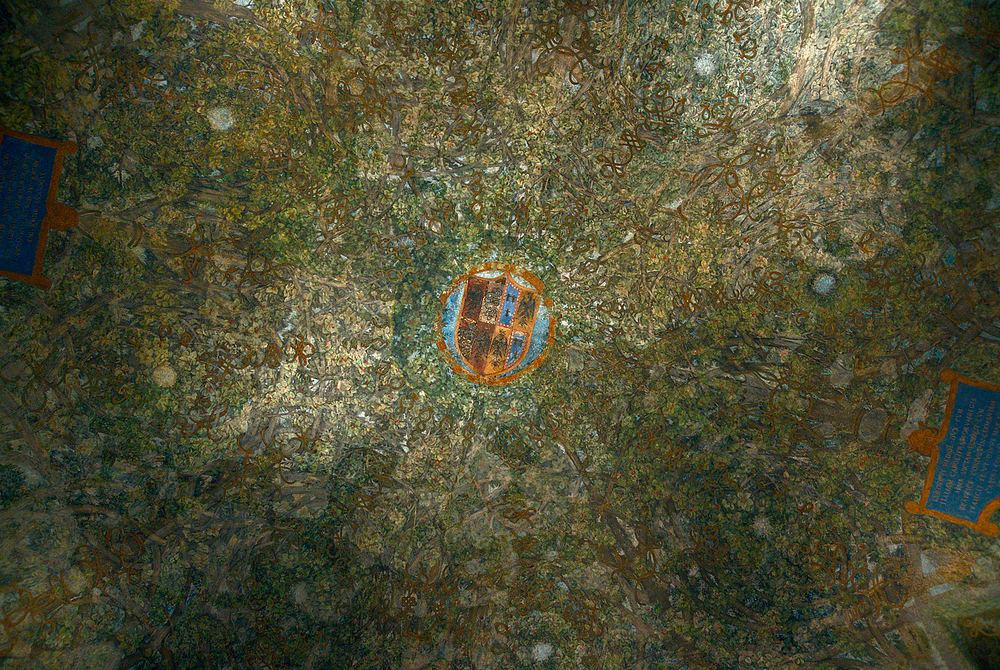
Milan will celebrate Leonardo with a trio of itineraries in the city, including, I note with pleasure, the opening of the extraordinary Sala delle Asse, which has been under restoration since 2013. The exhibition “In the Shadow of Il Moro: The Sala delle Asse,” from 16/05/2019 to 12/01/2020, will allow visitors to admire the architectural greenery that Leonardo painted to honor Ludovico il Moro.
Leonardo’s temporary exhibition in Vinci
But it would be a huge mistake, in this Italian itinerary, to leave out Vinci: a huge insult to a picturesque village, blessed with natural beauty, located in the green countryside near Florence. “Leonardo in Vinci. The Origins of a Genius,” is the incredible exhibition that, from 15/04/2019 to 15/10/2019 at the Museo Leonardiano in Vinci, will allow visitors to admire the first known landscape drawing in Western art, which Leonardo dated 5 August 1473. It represents a view of the Valdinievole and the lower Valdarno and already features the rivers, misty air, and nature in perennial growth that would appear in all of Leonardo’s works, although here these elements are sketched only lightly in pen. Only the Chinese and Japanese art of the period, in the rendering of rivers and in an atmosphere filled with misty air, demonstrate the same intelligent interest in nature.
Because of its fragile state, however, the design, on loan from the Uffizi Gallery’s Department of Prints and Drawings in Florence, will only be on view for five weeks and not until the exhibition’s end on 15/10/2019. That’s why I passionately urge you to…hurry!
Guided tours at Leonardo’s temporary exhibitions
To celebrate this important event, I propose a customized private tour: for more detailed information, please write to: info@myfloraguide.com
USEFUL LINKS:
https://www.palazzostrozzi.org/mostre/verrocchio-il-maestro-di-leonardo/
http://www.museoleonardiano.it/ita/eventi-e-mostre/in-corso/detail?eventId=238