

Whether at the table and in the kitchen, culture is served. The history and legends behind tempting Florentine delicacies.
Aperitivo in Florence
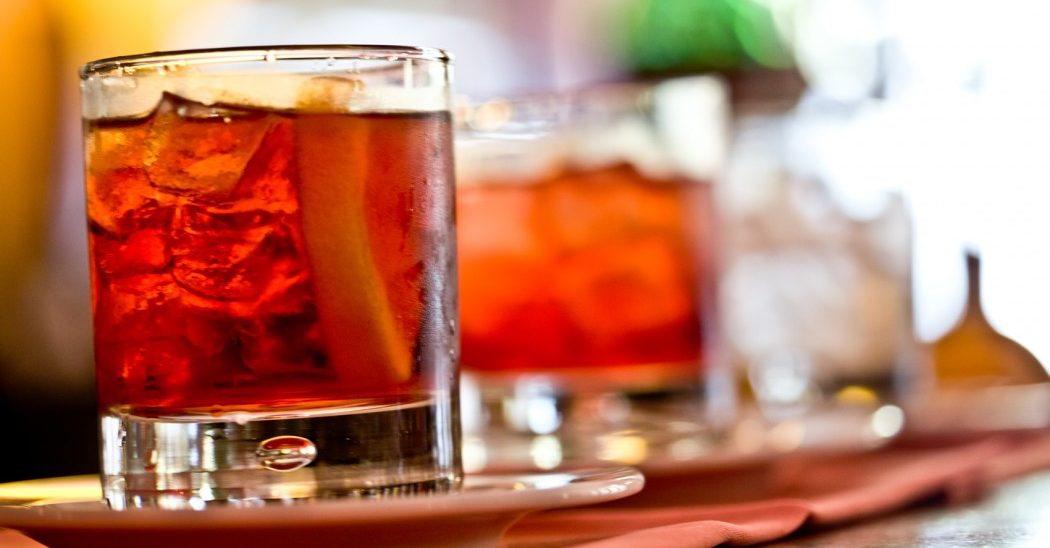
It’s a hot summer evening, you’re gasping from the Florentine heat and you’re overwhelmed by the sheer amount of art you’ve seen after having trekked from the Uffizi to the Duomo, from the Ponte Vecchio to Piazzale Michelangelo. You deserve a nice, relaxing aperitivo, the traditional Italian before dinner drink and snack. This time, you want to try something new. Why not a Negroni?
Alas, even the alcohol has an aspect of culture. In Florence, we just can’t do without it.
Let’s go back to 1900 and stroll along the elegant Via Tornabuoni. We stop at the Caffe’ Casoni and who do we find? Count Camillo Negroni, whose just returned from a trip to London. Filled with British allure, he asks his trusted barman, Fosco Scarselli, to add a “splash of gin” in his usual Milano-Torino (a cocktail with red vermouth and Campari bitters, later called an Americano). Thus “Count Negroni’s special Americano,” or Negroni for short, was born. Ready to wash your culture down with a drink?
Don’t waste your time looking for Caffe’ Casoni in Via Tornabuoni since, unfortunately, it no longer exists. But, you can make yourselves comfortable at Procacci, a historic luxury eatery founded by Leopoldo Procacci in 1885. Their special? It’s all about truffles. In 1925, the gourmet delicatessen received the Stemma Reale of King Victor Emmanual III. Today, Procacci still serves luxury and delicacies according to tradition.
Looking for the next charming locale for your aperitivo? I recommend Antica Sosta degli Aldobrandini in the San Lorenzo neighborhood, the Prosciutteria on Borgo San Frediano, Pop Café in Piazza Santo Spirito, Negroni on Via dei Renai in the San Niccolo’ neighborhood, Colle Bereto and Paszkowski near Palazzo Strozzi and Piazza della Repubblica, or SE. STO on Arno, located on the third floor of the Hotel Westin Excelsior in Piazza Ognissanti, for an aperitivo with an amazing view.
Another gem: the Negroni at the cinematographic Bar Necchi, where “Amici miei,” the Florentine protagonists of one of the most beloved Italian comedies, used to meet.
Where to eat in Florence: First Dishes (Primi)
In the meantime, amongst all these appetizing smells, you’ve started to feel pretty hungry. We’ll move to the nearby San Lorenzo Central Market, a building designed at the end of the 19th century by Giuseppe Mengoni the same architect responsible for the Galleria Vittorio Emmanuele II in Milan.
What can we order? We’re be spoiled for choice: in the summer, I’d recommend to stay light with pappa al pomodoro (even Rita Pavone sang about it) or panzanella. These are simple, traditional, farmer’s recipes that both use bread as the principal ingredient. The bread is cooked in tomato sauce with garlic and oil and served with black pepper to make pappa al Pomodoro and is soaked in cold water and then crumbled over cucumber slices and basil leaves to make panzanella.
This Tuscan bread is a little bit strange, isn’t it? It doesn’t taste like anything! “You will experience how the bread of others tastes of salt,” wrote a certain Dante Alighieri. In the middle ages, Pisa blockaded the sale of salt to the region’s inland towns: so Florence decided to beak their bread without it. The more bitter version of the story tells that Pisan bread was too expensive and the Pisans placed taxes that were too high on salt, so the Florentines had to make do with less. Bread is the main ingredient in many Tuscan recipes, including the heartier ribollita more typical of winter. Made with cavolo nero, cannellini beans, extravergin olive oil and a pinch of pepper, ribollita is delicious and I eat it by the ton every year.

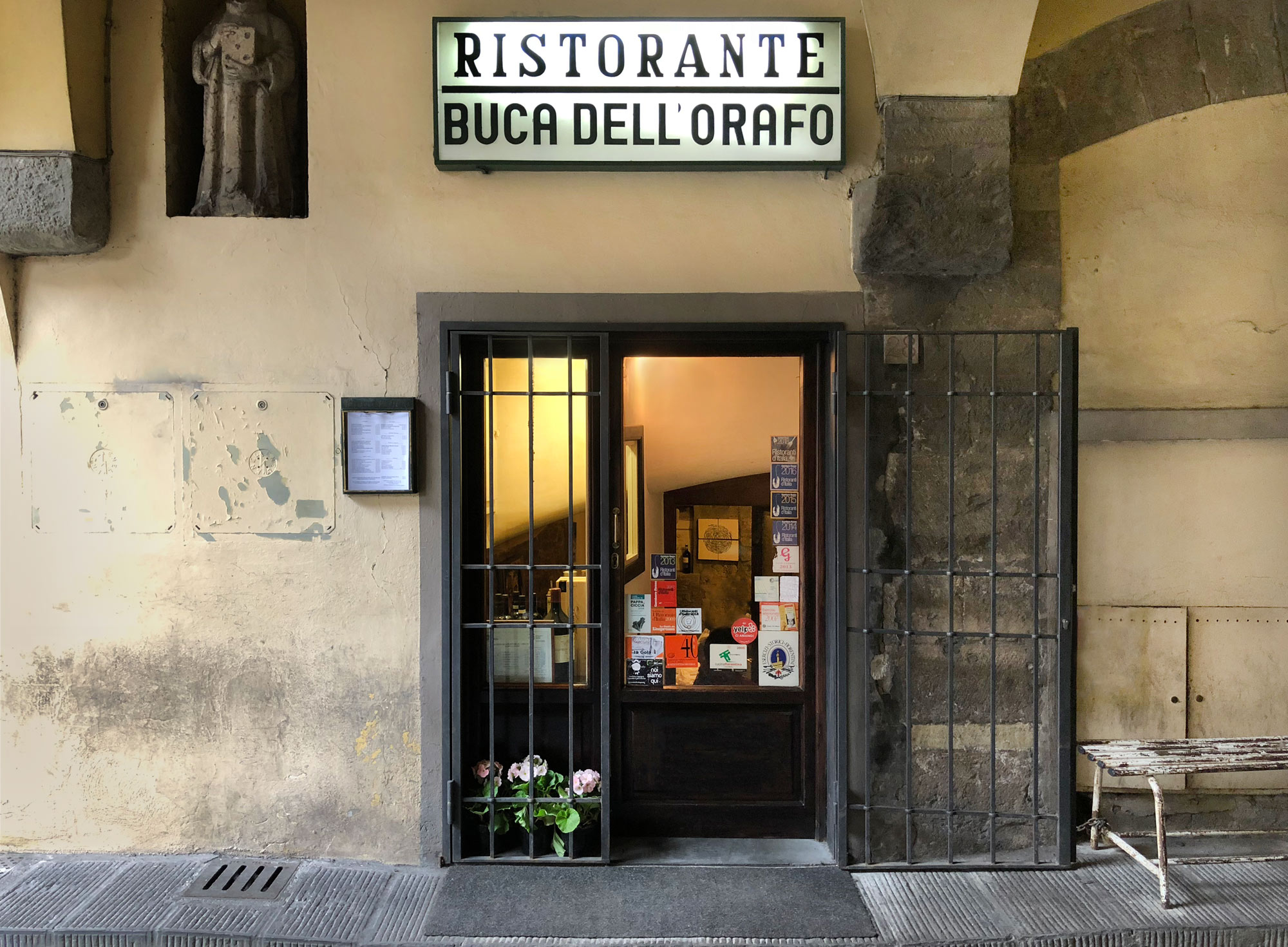
If the market’s too crowded, it might be better to reserve a table at a more intimate restaurant. Okay, but where? Buca dell’Orafo is ideal. At just a few seconds (yes, seconds!) from the Ponte Vecchio, the Buca dell’Orafo dates back to 1200 and was part of the church of Santo Stefano al Ponte. In the first half of the 20th century it became a photographer’s shop: in 1955 Mario Corsini, who had already founded Buca Mario, inaugurated this characteristic restaurant. If you’re thinking of coming here to east fast, you’re making a big mistake: it’s essential to take your time for an excellent dining experience and for good digestion, so make yourselves comfortable.
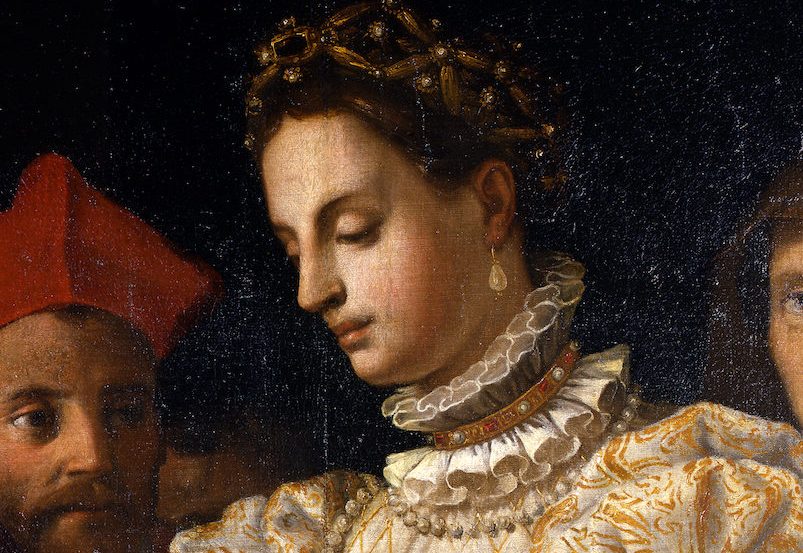
If you’re on a more modest budget, you’ll find another intimate but more affordable spot near the Ponte Vecchio. Ristoro dei Perditempo in Borgo San Jacopo offers simple, classic dishes in a relaxing atmosphere with a view of the Arno. When choosing a first dish, which change according to the seasonal ingredients available, don’t forget to try the crespelle alla fiorentina: these galettes filled with ricotta, spinach, and béchamel were important the France of Caterina de’ Medici, wife of Henry II in 1533 and queen of France from 1547 to 1589. In France, the crespelle became crepes. In fact, the sauce we now call bechemel, after the Marquis of Bechemeil, can also trace its origins back to Florence, where it is called salsacolla.
Here are the restaurants I recommend for your lunches in Florence: Trattoria San Lorenzo near the Duomo, Cipolla Rossa in Via dei Conti, Osteria del Cento Poveri in Via Palazzuolo and Osteria da Giovanni in Via del Moro.
Where to Eat in Florence: Second Dishes (secondi)
Are you hungry carnivores? You’re in the right city.
Few people know that arista alla fiorentina owes its name to the Byzantines who visited Florence in 1439 for the Council between the Western Roman church and the Eastern Byzantine church. Organized in Florence by Cosimo “the Elder” De’ Medici, this prestigious event brought exotic, luxury, and intellectual elements to the city. During a banquet, the Greek-speaking Byzantines praised the pork they were served as “aristos” or “the best,” “excellent.” This is where the Italian word arista comes from.
Peposo all’Impruneta is made with Chianina beef, black pepper, garlic, rosemary, and Chanti wine. Even this recipe can be attributed to Florentine artistry: in 1420 Filippo Brunelleschi began the construction of the dome of the Florence cathedral. Brick-makers from Imprunetta, adept at using the town’s furnaces to make terracotta bricks, decided to kill two birds with one stone. They began shipping bricks from Imprunetta to build the dome but also prepared meals for those working on the construction site, slow-roasted with in the same furnaces where the bricks were made. The workers ate copious amounts of bread to balance out the spiciness of the pepper and wine in their meal and quickly felt full without ever having to leave the dome construction site. Brunelleschi saved the most prized cut of meat for himself: this type of meat is in fact called peposo del Brunelleschi.
But let’s get to the queen of the table: the celebrated bistecca fiorentina. Where should you eat this Florentine steak? A true trip to Florence can’t exclude a taste of this cut of beef, including the bone, cooked rare on the grill. Do you want it well-done? Don’t come to Florence.
Let’s head to Trattoria da Cammillo, in the Oltrarno, for a taste of this culinary catharsis, described by the famous Italian cookbook writer Pellegrino Artusi as, “deriving its name from the English word beef-steak, which refers to the ribs of the cow, our steak is simply a cut of veal loin served with its bone and measuring a finger to a finger-and-a-half in width.”
If, however, you’d like to opt for a truly unique dish, I recommend going to Ristorante Cibreo. Located in the Jewish quarter of Sant’Ambrogio, this restaurant has delighted the palates of Florentines and many others since 1979. But the name cibreo also refers to a dish. Pellegrino Artusi defined it as: “a simple, but delicate and fine dish well-suited to ladies with listless and convalescent stomachs.” It’s made with egg, broth, onions, sage, and liver, but also with chicken comb, wattle, and…testicles. Consider yourselves warned.
It appears that Catherine de’ Medici was literally crazy for this dish and even ate so much of it that it gave her indigestion.
Street food? Tripe and lampredotto in Florence
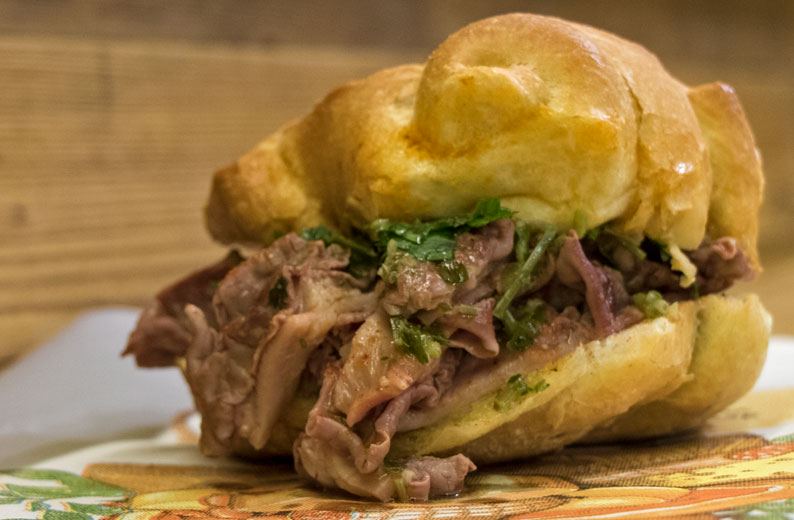
Hungry but in a hurry? There’s a solution for everything! Where are we going to eat this time? In Piazza dei Cimatori, a short walk from Casa Dante and Piazza della Signoria, where the Marchetti brothers have prepared tripe and lampredotto for years. L’Antico Trippaio is located at a very convenient crossroads: tourists and Florentines pass by 24/7. Lampredotto is the fourth stomach of the cow, called the abomasum; tripe also contains part of the bovine digestive system, including the esophagus. Lampredotto is served with a parsley sauce (salsa verde) on a traditional roll called a semelle that has been soaked in broth. Dress accordingly…It might be a good idea to skip wearing your white linen shirt today!
Healthy food? Where to eat in Florence
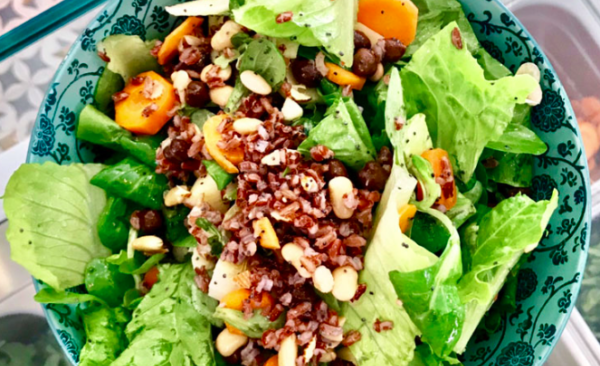
If after all of this meat and lampredotto you feel you need to cleanse with a healthy salad, forget the sad salad bowls of the 90s: today’s salad is creative, cheerful, colorful, inventive, and shabby-chic. I recommend trying out Rosalia, in Via dei Servi. With just a few tables and trendy wall decorations, you’ll enjoy a banquet of fruits and vegetables with exotic and original ingredients that will take you on a trip in your imagination. It’s a small green corner of Florence, just a few steps away from the Duomo, with a young, fresh, and dynamic atmosphere. You’ll leave feeling light, relieved of the dining sins you’ve committed during your vacation, I promise.
Last but not least…Dessert
We all know that the Florentines invented the Renaissance: scientific and atmospheric perspective, cangiantismo, sfumato, stiacciato…but it appears that wasn’t enough. They even invented gelato.
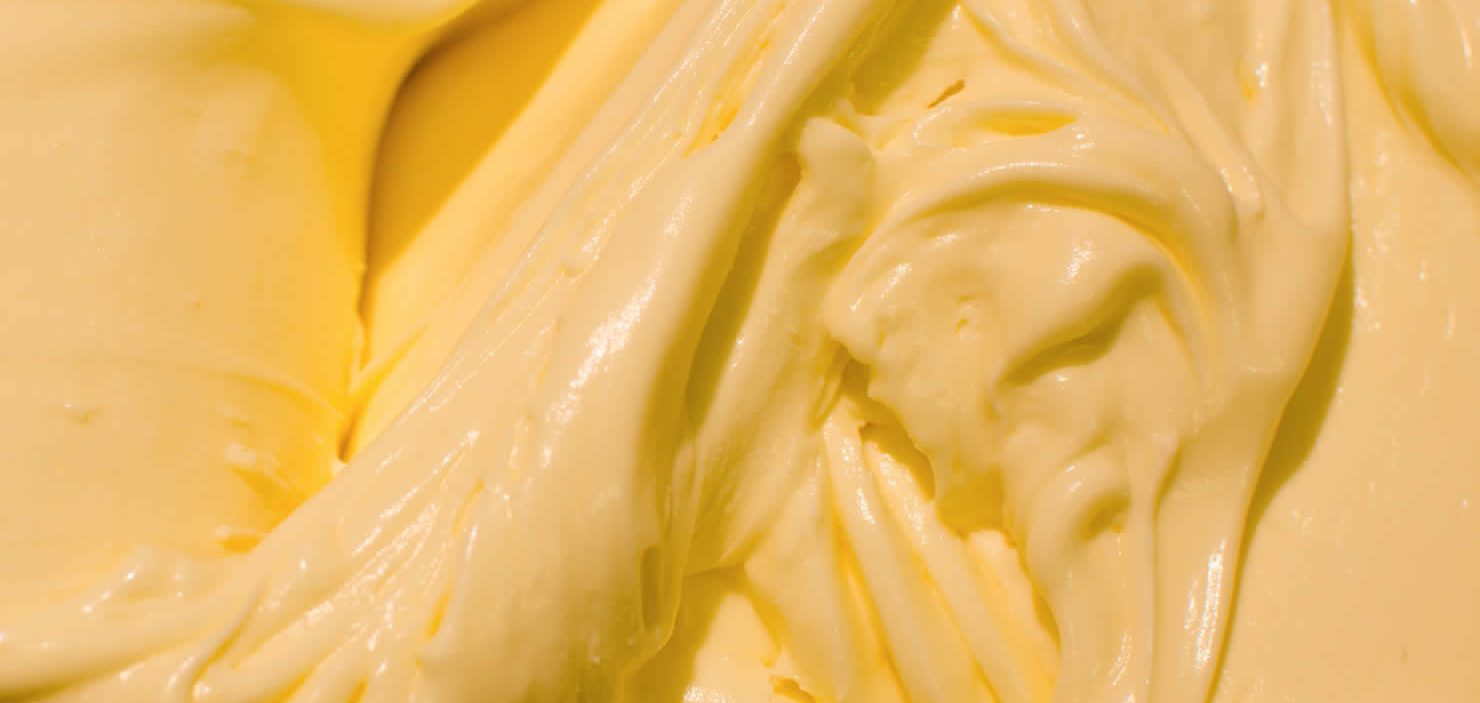
Around 1550 Bernardo Buontalenti, a polymath architect, sculptor, scenographer, costume-designer and more had a mission: the Medici commissioned a recipe to impress their guests, ambassadors from Spain. Between one banquet and the next, Buontalenti arranged some fireworks (for this reason, he was also nicknamed Bernardo of the Pinwheels), and presented a new, totally Florentine, recipe: gelato. Made with milk, honey, egg whites, sugar and a touch of wine (and some also say salt), gelato was born. Flavored with fruit and eggnog, it was called “crema fiorentina” or “crema Buontalenti.” Is your mouth already watering? Gelateria Santa Trinita in Piazza Frescobaldi and Gelateria Badiani in Viale dei Mille await you with a flavor dedicated to the effervescent architect.
But it’s not over yet: In 1533, Catherine de’ Medici left for France, where she married Henry II. She brought with her an amry of cooks, among whom a certain Ruggeri. Ruggeri was more of a poulterer than a master chef. However, that didn’t prevent him from cultivating his passion for cooking, so he participated in the celebrations of the wedding of Catherine and Henry at Marseilles by preparing his “little gelato treat,” the recipe for which was “ice flavored with sugared and scented water.” Sorbet was born. Ruggeri was so famous that he attracted envy from every corner of France: and so, exhausted, he entrusted his secret recipe for sorbet in a letter to Catherine and went back to selling chicken.
Check, please!
“La Scienza in cucina e l’arte di mangiare bene” (The Science of the Kitchen and the Art of Eating Well) is a title that speaks for itself. In 1891 Pellegrino Artusi (1820-1911) published the book that would make him famous: in 1931, it was one of the most read books in Italy along with The Betrothed and Pinocchio. A native of Forlimpopoli who had moved to Florence, Artusi’s cookbook described 790 traditional recipes and remains the gastronomical bible in Italy.
The check in Florence is sweetly dipped in culture: After all, it really couldn’t be any other way. Catherine de’ Medici introduced the fork in France, along with all of the abovementioned recipes: the countryside and land of Tuscany have done the rest: with the simplicity, harmony, and flavors of the past.
Already making reservations? The only thing left to do is to wish you buon appetito.
Interested in taking a gastronomic tour that fits your needs? Flora will be happy to organize something for you! From walking tours with tastings to winery visits, from an aperitivo on a terrace to a nightcap under the moon, there are many options. Florence is teeming with food and culture, it’s up to you to decide how to taste the beauty it offers…
For more details and for personalized guided tours, contact: info@myfloraguide.com
Helpful links:
www.procacci1885.it
www.negronifirenze.it
www.mercatocentrale.it
www.bucadellorafo.com
www.cibreo.com
www.lanticotrippaio.com
www.rosaliasalad.it
www.gelateriasantatrinita.it
www.gelateriabadiani.it


